

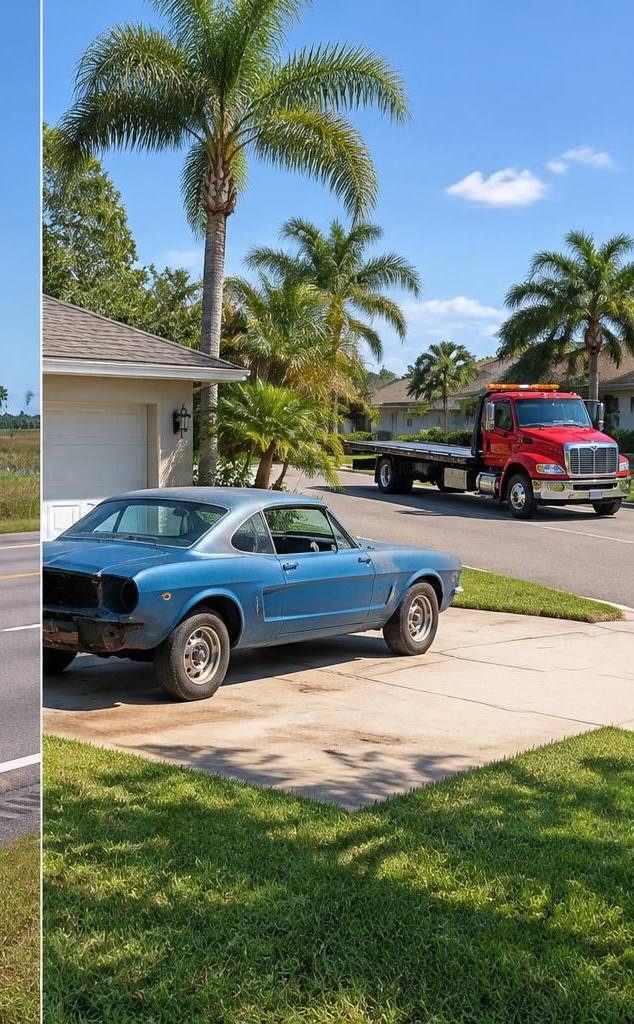
Buying a car that does not run can be the beginning of a project, a repair plan or a practical replacement vehicle. Getting it home is a separate task from buying it. Before agreeing to collect the car, work out who can release it, whether it rolls, how equipment can reach it and where it can be unloaded. Those details matter whether the seller is a private owner, an auction, a relative or a business.
Confirm the car can legally be released
Ask the seller or business what is needed to release the vehicle. An auction or yard may require specific documents, identification or an authorized collector. A private sale still needs clear permission from the person controlling the car. Do not assume that a payment receipt alone gives a towing crew entry to every property or authorizes it to collect a vehicle from behind a locked gate.
Arrange the handoff before the truck is requested. Decide who will provide keys and who can answer access questions. If you are not attending, discuss an authorized person with the crew and the seller. Keep required release paperwork ready, but do not post personal documents publicly. The transport plan should be based on confirmed permission rather than a chain of assumptions between buyer, seller and driver.
“Does not run” is only the first detail
A car can fail to start while still rolling freely. Another may have seized brakes, a locked wheel, missing keys or a transmission issue that limits movement. Tell the crew about each known condition. If the car has sat for a long time, describe the tires and what you know about its last movement. Do not promise that it rolls simply because the seller remembers driving it years earlier.
Starting the engine and loading the car are different tasks. A mechanic can assess why it will not run; the towing crew needs to know how it sits and whether it can be positioned for loading. Do not attempt an improvised repair in a seller’s yard just to make collection possible. If you cannot safely inspect a detail, explain the uncertainty when you call.
Check keys, tires and wheel condition
Keys matter even when the engine will not start. Steering or other vehicle controls may be limited without them. Tell the crew if the keys are missing rather than mentioning it after arrival. Describe flat tires, visible wheel damage and whether the vehicle seems to be blocked or settled into the ground. Those conditions can change the equipment and access discussion.
Do not crawl beneath an unsupported car to gather more information. You also do not need to inflate or move a damaged tire solely to prepare a request. Give an honest description of what is visible from a safe position. Photographs can help when requested, but they should not require entering traffic, unstable ground or a restricted area. Safety is still the priority even for a car that never leaves a driveway under its own power.
Look at the path out of the property
A vehicle may be accessible to a person on foot but not to a rollback. Is it behind another car? Is there a narrow gate, low branch, steep driveway or soft surface? Can equipment be positioned without blocking an active roadway? The pickup address should include the correct entrance and the actual location of the vehicle. A navigation pin at the front of a property may not reach a car stored at the rear.
If the seller must move another vehicle or open a gate, arrange that in advance. A project car can be parked beside equipment that has accumulated around it over time. Clearing the path is a property-access task, not something to leave unresolved for the towing crew. After rain, describe the current ground conditions; a previously firm yard may no longer support the same access.
Choose a destination that can accept a non-running car
At home, make sure the car has a permitted parking space and room to unload. Do not choose a spot that requires the engine to start immediately after delivery. If the driveway is steep, narrow or occupied, discuss that before the move. Confirm with anyone sharing the property that the vehicle can remain there. A successful purchase does not itself provide permission to park it in another person’s space.
If the first destination is a mechanic or dealership, call the business and explain the condition. Ask whether it can receive a non-running vehicle and where it should be left. Confirm the key handoff and any appointment or receiving hours. Our shop and dealership transport guidance covers those practical arrangements. The repair destination should be ready before pickup begins.
Discuss the right transport plan
Central FL Auto Towing & Recovery uses flatbed rollback trucks. Carrying a vehicle rather than driving it can suit a non-running-car move, but there is still a loading assessment. Wheel condition, ground clearance and access do not disappear because the destination is nearby. A low project car or one with missing components needs a description of its current state, not just the original make and model.
Start with our non-running vehicle hauling information and call with the details. We are based in Apopka and serve Central Florida up to 100 miles from Apopka. If the seller or destination is farther away, ask about the specific trip rather than assuming it can be accepted. The job needs confirmation based on vehicle, access, distance and availability.
Keep everyone using the same information
Put the pickup address, entrance, seller contact, destination and vehicle details in one set of notes. If the seller changes the collection location, update the crew. If a shop changes its receiving window, say so before the car moves. Avoid having one person describe a running car while another describes seized wheels. A current and consistent description helps the transport conversation remain focused on the actual vehicle.
When submitting online, include notes about keys, rolling condition and access. SMS consent is optional and is not a condition of service. Sending a request is not the same as confirming pickup, so keep your phone reachable. If the request cannot send, call (888) 563-1435 rather than assuming it has arrived. A clear plan protects the purchase from becoming an avoidable collection problem.
A local crew. One call.
Tell us about the vehicle and your destination.
(888) 563-1435Open 24 hours, 7 days
REQUEST A TOW