

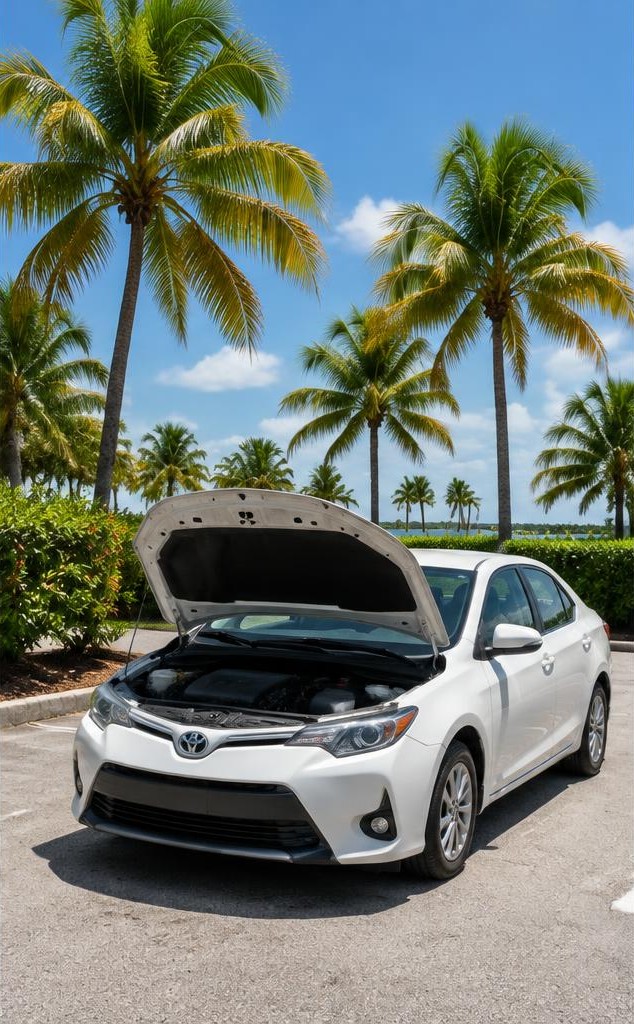
Central Florida summer driving combines heat, heavy rain and plenty of time in traffic. A car that felt fine on a short morning trip may behave differently after a long afternoon drive. That does not mean every warning is caused by the weather. It means the conditions make it worth paying attention to changes before a problem leaves you stranded. A mechanic should diagnose the cause; a tow conversation starts with whether the vehicle can safely be moved.
Notice the change, not just the dashboard light
A new warning light, unusual sound or change in handling deserves attention even if the engine still runs. Think about what changed and when. Did the temperature reading rise in traffic? Did the car hesitate after sitting in the sun? Did a tire start vibrating after a highway drive? Those observations help a repair business understand the problem. They also help a towing crew plan the collection without asking you to keep driving an unsafe car.
Do not treat a warning light as permission to reach the next destination at all costs. If the vehicle smells hot, loses power or cannot be controlled normally, find a safe stopping place when possible. A parking lot away from traffic is preferable to standing beside an active lane, but the car must be capable of reaching it safely. If people are in immediate danger, contact emergency services rather than focusing first on the repair.
A no-start condition is not always a simple battery issue
Heat can place stress on a battery, and a vehicle that cranks slowly or will not start needs assessment. However, the sound at the key does not prove which part failed. A starting problem may involve connections, charging, the starter or another issue entirely. Avoid repeatedly attempting to start the engine when something seems wrong. Record what happens and pass that description to your mechanic. Do not promise yourself a quick fix based only on a familiar symptom.
At an office park or shopping center, check the practical details before arranging collection. Where is the vehicle parked? Is someone available to release it? Does the lot close or use a gate? If keys are available, keep them ready. If you have already made arrangements with a repair shop, confirm it can accept the car. A no-start car may still roll freely, and that distinction matters when explaining its condition to the crew.
Treat an overheating warning carefully
If the temperature gauge rises sharply or an overheating warning appears, do not assume the engine will cool down while you continue driving. Move to a safe place when possible and stop. Do not open a hot radiator cap or pressure reservoir; the system may contain hot pressurized fluid. Give the vehicle time and consult professional guidance. A towing crew does not need you to prove the cause by opening the hood in an unsafe roadside location.
Tell the mechanic what you observed: the warning, any steam, loss of power and whether the engine was switched off. Tell the towing crew whether the car starts and whether you believe it can roll for loading. Those are different conversations with different purposes. Diagnosis belongs to the repair business. Transport planning concerns access, vehicle condition and the route to the shop.
Tires deserve attention before a long drive
Tire condition matters in summer traffic and rain. Use the vehicle manufacturer’s pressure guidance and have wear or damage assessed rather than guessing from appearance alone. A tire that is visibly damaged, repeatedly loses air or feels different while driving should not be ignored. Avoid checking a traffic-side tire while vehicles are passing close by. When stopped safely, explain any known tire issue as part of the transport request.
A flat tire does not tell the crew everything about loading. Say which wheel is affected and whether the vehicle still rolls. If there is wheel or suspension damage, mention that separately. Do not attempt to move a car if doing so would put someone at risk or cause additional damage. A careful description lets the crew assess the situation before equipment is positioned.
Summer storms can change a familiar road
A road you use every day can look different during heavy rain. Visibility falls, water can hide the pavement edge and the ground beside a driveway may become soft. Do not drive through standing water when you cannot judge what is beneath it. A stranded vehicle on wet or unstable ground requires a description of both the vehicle and its surroundings. Tell the crew whether it is on pavement, gravel, sand or mud.
After a storm, do not assume a car is safe to start simply because the water has gone down. If water entered the vehicle or its mechanical systems, consult a professional before starting it. Arrange transport if needed rather than testing it by driving. Your observations matter, but avoid making mechanical claims you cannot verify. Tell the repair shop what the car was exposed to.
Set up a repair destination before pickup
When you need car and SUV towing, have the pickup and destination ready. A mechanic or dealership may have a preferred receiving area or restrictions on after-hours arrival. Contact the business and ask how the vehicle should be accepted. The key handoff and a receiving contact should be agreed before the car is moved, not improvised when the truck reaches the property.
Our shop and dealership transport guidance covers that handoff. Keep notes about warnings and symptoms for the mechanic, and keep transport notes focused on access, condition and the destination. If your car is in a gated community or managed lot, arrange permission and entry. Summer weather should not force the crew to guess where the vehicle sits or who can release it.
Make the request complete
Central FL Auto Towing & Recovery serves Apopka, Orlando and Central Florida up to 100 miles from Apopka. Call with the vehicle’s make, condition, current location and destination. Describe what happened without feeling that you must diagnose the failure. Keep your phone reachable so the pickup can be discussed. The online form sends a request; service arrangements still need confirmation.
The most useful preparation is practical: pay attention to unusual behavior, stop when driving becomes unsafe, avoid risky roadside repairs and choose a receiving destination. Heat and storms are part of summer driving, but they do not change the priority. People come first, mechanical diagnosis comes from a professional, and vehicle transport starts with a clear plan.
A local crew. One call.
Tell us about the vehicle and your destination.
(888) 563-1435Open 24 hours, 7 days
REQUEST A TOW